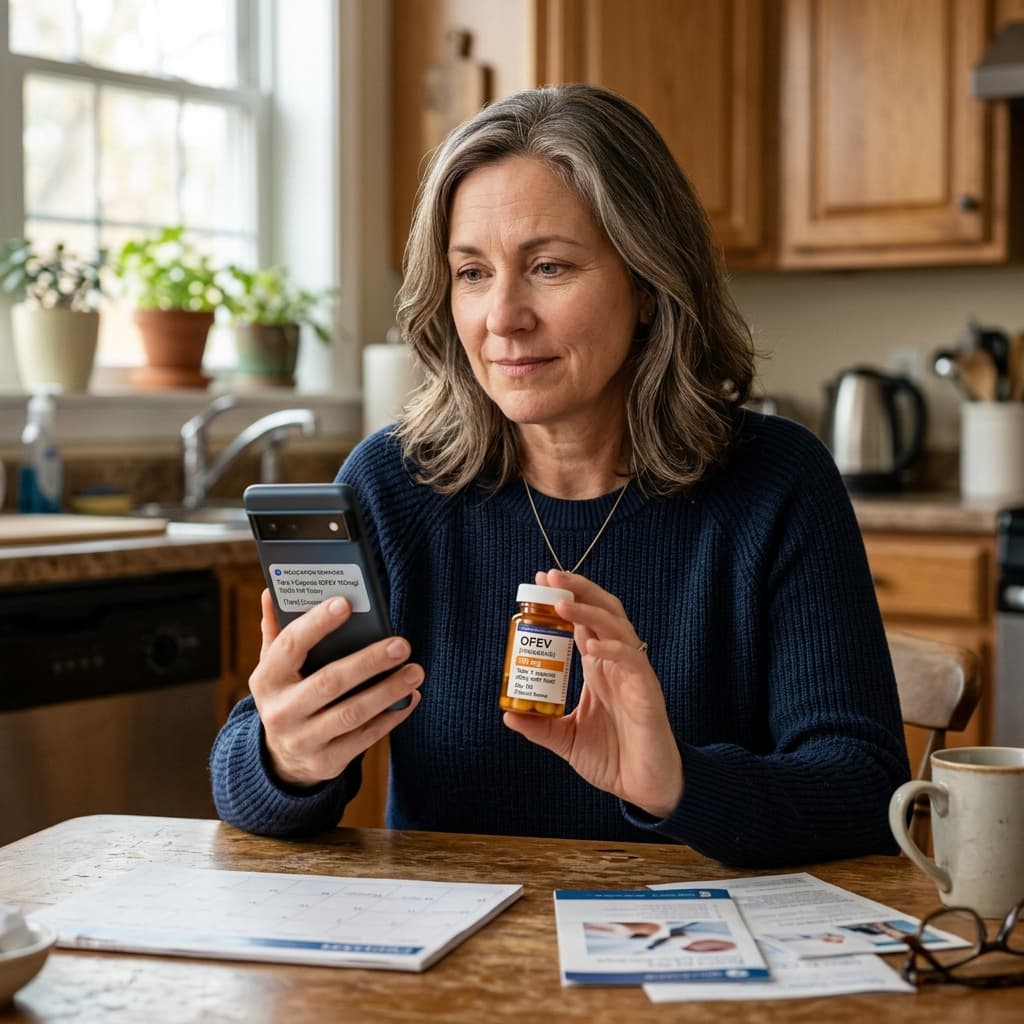
You’d be surprised how many people just forget to take their medicine. Not because they don’t care — because they’re human, they’re sick, they’re juggling life, and the drug is expensive and complicated. And in specialty pharmacy, where a month of therapy can cost more than a car, forgetting isn’t a minor inconvenience. It’s waste, it’s worse outcomes, and it’s a staggering amount of money going down the drain.
The number that should stop you cold
Medication non-adherence and related problems cost the U.S. healthcare system more than $500 billion a year — one widely cited estimate puts the morbidity and mortality figure at $528.4 billion annually. More than 100,000 Americans die each year from not taking medications as prescribed, which is more than die from influenza, pneumonia, or car accidents. Non-adherence drives up to 25% of hospitalizations and roughly doubles the odds of readmission within a month of discharge. And about half of Americans on long-term therapy don’t take it as prescribed.
At a specialty pharmacy conference I went to, the figure that stuck with me was the drop-off curve: more than 60% of patients stop taking their medication within the first 30 days, usually because of cost or logistics. Thirty days. That’s the window where the entire value of the therapy — clinical and financial — is won or lost.
Why specialty makes this worse and the fix more valuable
In retail, a missed dose of a $10 generic is a rounding error. In specialty, every patient who falls off therapy in week three represents a high-margin, high-acuity prescription that won’t refill, a payer relationship that suffers, and a manufacturer hub contract that judges the pharmacy on adherence metrics. Adherence isn’t just good medicine in this world — it’s literally how specialty pharmacies get measured, paid, and kept in networks.
So the pharmacy has every incentive to call every patient and check in. And that’s exactly the problem: there aren’t enough people to make those calls. This is how you end up with one pharmacy making 80,000 calls a month by hand and still not reaching everyone in time.
Proactive, not reactive
The thing about adherence is that it’s an outbound problem. You can’t wait for the patient to call you — by the time they call, they’ve already stopped. You have to reach out, on a schedule, at the moments that matter: a few days before a refill is due, right after a dose change, during the fragile first month on a new therapy.
A voice agent is built for exactly this cadence. It can run a daily outbound campaign across thousands of patients, ask how they’re doing on the medication, confirm they still have supply, surface side effects, and — critically — detect the difference between “I’m fine” and “I stopped because it made me nauseous.” That second answer triggers a warm handoff to a pharmacist instead of being lost. The agent remembers the prior call, so the patient isn’t starting from zero every time, and it can drop to a text message for the patients who’d rather tap a reply than talk.
Empathy is the whole game here
I want to be clear that this only works if it doesn’t feel like a robocall. Adherence conversations are personal. People are scared, tired, sometimes embarrassed that they skipped doses. A flat, scripted bot makes it worse. The reason I think voice AI is finally ready for this is that the latency and the emotional range have gotten good enough that the agent can sound like it actually cares — pause, acknowledge, adjust — instead of plowing through a script. That’s the bar. Below it, you shouldn’t deploy.
The business case writes itself
If 60% of patients fall off in 30 days, then even a modest improvement in first-month adherence translates directly into more refills, better hub-contract performance, and fewer downstream hospitalizations that payers and the whole system pay for. For a specialty pharmacy, adherence is revenue retention. For an investor, it’s the clearest line from “voice AI feature” to “dollars on the income statement” in the entire category. Forgetting is a $528 billion problem. Reminding, done well and at scale, is the opportunity.