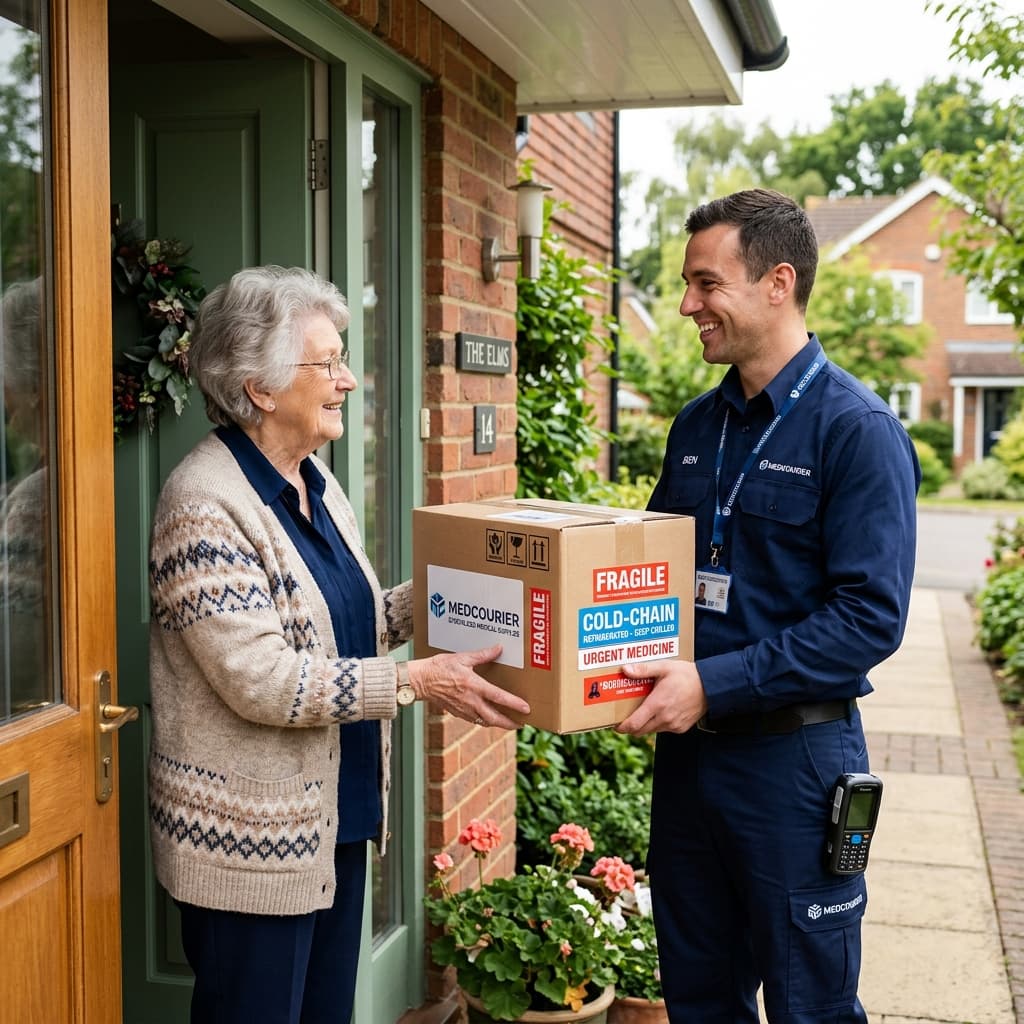
You’d be surprised how delicate some of these drugs are. And you’d be even more surprised how often a $15,000 biologic ends up sitting on a porch in the sun, or in a kitchen, on the counter, for six hours because nobody told the patient it had to go straight into the fridge.
This is the part of specialty pharmacy that quietly destroys money, and it happens at the very last foot of the journey — the patient’s front door.
The stakes, in numbers
Most biologics live in a narrow 2°C to 8°C window. The package inserts often say, flatly, that any excursion outside that range is not allowed. Even a 1-2°C deviation can degrade highly sensitive products — biologics, insulin, vaccines — to the point of being ineffective or unsafe. A growing slice of advanced therapies, including cell and gene therapy, need ultra-frozen storage as cold as -80°C, sometimes cryogenic. Globally, pharmaceutical cold-chain failures are estimated to cost around $35 billion a year. A single rejected high-value biologic shipment can run losses north of $500,000 once you add disposal, remanufacturing lead time, and expedited reshipping.
The industry has poured enormous effort into the cold chain from the lab to the truck to the doorstep. Validated packaging, temperature loggers, real-time monitoring. And then the package lands on the porch and the chain just… ends. Because the last link isn’t a logistics company. It’s a person — often an elderly, sick, overwhelmed person — who may not be home, may not understand the urgency, and may leave the box outside until dinner.
Why phone calls are the actual control point
The cold chain at the patient’s door is a communication problem dressed up as a logistics problem. You need to confirm the patient will be home. You need to confirm they understood the box has to be refrigerated immediately. You need to know if the cold pack arrived warm. You need to catch the excursion before the patient injects a degraded dose. None of that is solved by a tracking number — and patients call anyway, because a tracking number doesn’t reassure a scared person holding a $15,000 box.
This is a perfect job for a voice agent, and here’s why timing matters: it has to happen at the speed of the delivery, not the speed of a staffed call center.
What an automated cold-chain workflow looks like
A voice agent can call the patient the morning of delivery to confirm someone will be home and walk through the “fridge within X minutes” instruction in plain language. It can call again right after the carrier marks the package delivered — that’s the critical window — to confirm the box was brought inside and ask whether the cold pack still felt cold. If the patient says it was sitting out, or the gel pack was warm, the agent escalates immediately: flag the record, trigger a pharmacist callback, hold the patient from using the product, and start a replacement if needed. Every step gets logged, which matters when you’re dealing with product accountability.
And because the agent has memory and can switch channels, the whole thing can move to SMS if that’s what the patient prefers — “Hey, just confirming you got the package and it’s in the fridge?” — with the conversation carrying over seamlessly.
The ROI is almost embarrassing
Think about the unit economics. If a single excursion on a single high-value specialty drug can cost five or six figures, then an automated delivery-confirmation and excursion-catching workflow doesn’t need to save many shipments to pay for itself for a year. One catch can cover the whole program. And that’s before you count the clinical upside of a patient not injecting a degraded biologic, and the adherence upside of a patient who actually got a usable dose into their body on schedule.
The cold chain is one of those places where specialty pharmacy already knows it has a problem and has simply run out of humans to throw at the last mile. Voice AI is how you finally close the gap at the door.